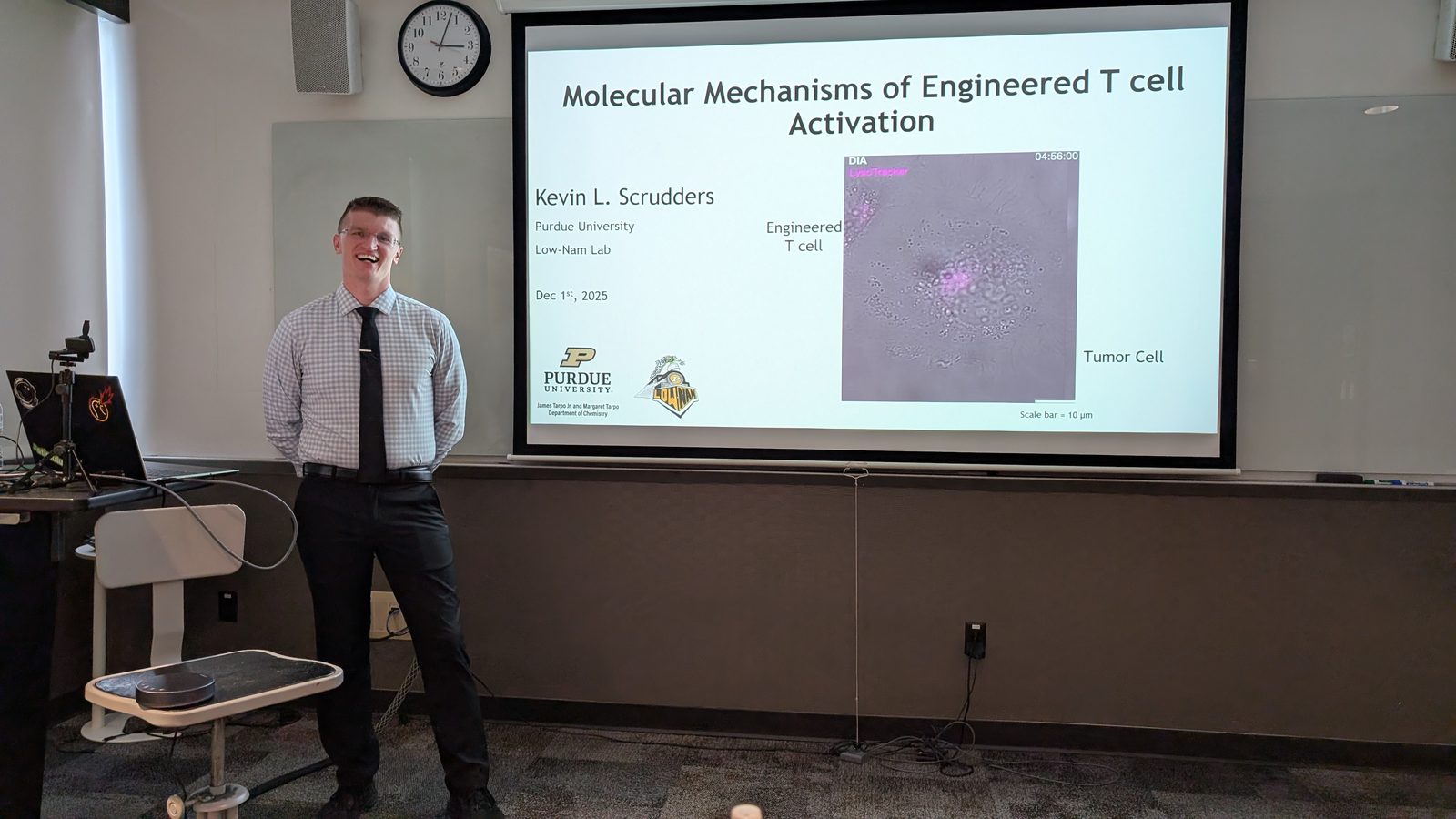
I placed second in the informative speaking category at the OFA Novice State Championship.
I was really delighted to have the leadership of Dr. Dan Higgins to learn from, and to grow my capacity to communicate.
Below is the speech I gave.
On a July 6th 2014, two men fought to the brink of exhaustion for four hours for the title of the most prestigious grand slam in tennis, Wimbledon. One of those men, Novak Djokovic came out on top to win the last year. In a match only separated by a slim six overall points Djokovic could have attributed his win to skill or knowledge, however, another factor was his racquet. Djokovic’s current weapon of choice is a HEAD racquet relatively new to the tennis scene. Having been first produced in 2012, this racquet uses a developing material, called Graphene. Last updated February 2nd, 2015 the University of Manchester’s website describes graphene as a “one atom thick, two-dimensional crystal” made solely of carbon that is “200 times stronger than steel”. Graphene is currently used in security devices in packages, skis, bicycle wheels, bike shoes, bike helmets, and of course tennis racquets. The University of Manchester puts it this way “The potential of graphene is limited only by our imagination”. To better understand graphene, today, we will take a look under the microscope at graphene’s properties, then we will conduct a few experiments to see its applications, before finally analyzing the implications of this amazing material.
First to better understand Graphene we must take a microscopic look at what properties make graphene so super. For starters, graphene is the world’s first two-dimensional material. Graphene is so thin that it only has a length and width. As indicated by its thinness, graphene is ultra-light, however, just because it is a light weight does not mean it is a weakling, too. As previously stated, graphene is two-hundred times stronger than steel. Something stronger than steel would presumably be thought to be inflexible, but as shown by an American Chemical Society article of October 2012 graphene is “as flexible… as a piece of paper”. It is even fire resistant. The properties do not end at being a great building material though. Graphene is an amazing electrical conductor that even outperforms silver in that it will allow electricity to pass through it 1.5 times more easily. Speaking of conductivity, the title for best thermo conductor now goes to graphene as well. This means that kitchen pots and pans made of graphene will heat up much faster therefore reducing cooking times. We might even be able to watch the pot boil. Graphene’s molecular shape provides a barrier that prevents small compounds from passing through it. This barrier even prevents oxygen from getting through and thus has been recognized by a May 2nd, 2012 American Chemical Society article as an anticorrosion agent that is as good as agents commonly found in car paint. Unfortunately, these fantastic properties cannot be seen by the human eye since that same American Chemical Society article mentions that graphene “absorbs two percent of light” making it essentially “transparent”.
Now that we have observed graphene’s properties we can conduct a few experiments to see graphene’s various applications. These metaphorical experiments will show us two main areas of application for graphene: structural and health related. First graphene’s structural applications. Since its inception in 1903 the aeronautical industry has been plagued by making heavy objects fly. Graphene consequently when applied as a structural material will be able to lighten the load of airplanes and spaceships without compromising their integrity. Since graphene has the optimal conductivity, humans will be able to create even faster computer chips than the current silicon chips. This same electrical conductivity according to the previously mentioned American Chemical Society article will also light the way for “very efficient” solar energy panels that are “cheap”. On the topic of costs, the smart phones of our day and age most likely have touch screens that are made of the rare earth metal Indium. Because Indium is not cheap it follows that graphene which is made of the fourth-most abundant element will be cheap, hence a cheap touch screen. Graphene will be affecting our phones another way too. Phone batteries are man’s best friend, said no one ever. Unlike your dog, low batteries are never a happy sight, and they cannot even rollover on command. In the future though, graphene based super capacitors would replace batteries. Whereas these capacitors would, much like your pet, be awake for days, yet unlike your lazy companion only take a matter of minutes to recharge. Increasing our imagination, graphene could be used to create televisions and displays that are translucent and foldable. The BBC on November 29, 2012 alludes to the possibility of bendable tablets that in theory could be rolled up and taken with you in your pocket.
Taking a look at graphene’s health related applications, we see graphene has several applications such as being sensory devices that could monitor the biological levels of glucose or hemoglobin. To do this a specifically modified graphene compound will bind to the selected substance even in trace amounts. Graphene’s compatibility with tissue cells and its large surface area provides a use in improving the process of tissue regeneration. To do this scientists will use graphene oxide as a scaffolding. According to an article published on May 13 2014 in the Japanese Journal of Applied Physics this scaffolding will “provide the base for repopulation” of new cells by encouraging attachment of the surrounding cells. This last application today is a true life saver. Recalling that graphene prevents tiny molecules from passing through it, we could see in the future a graphene product that can distill pure water from any source and even filter pure water from the sea. A February 14th, 2014 article from the University of Manchester states through recent research that filtration of sea water “is no longer science fiction”. With this coming breakthrough in filtration humans could finally easily transform the 96% of earth’s water that is too salty to drink into pure H2O.
Now that we have experimented with some of graphene’s applications, we can analyze the future implications of this amazing material. Graphene’s aeronautical applications will end with planes having improved fuel efficiency, thus creating less air pollution from fuel consumption. This translates into reduced prices for the customer with the added benefit of safer flights both for the environment and the passenger. With the eventual cheap costs associated with graphene, today’s high end PCs will be the future’s economic computers. Anyone could, in theory, obtain the benefits of advanced computer technology. Low budgets in mind, solar panels that incorporate graphene will be more accessible to the population as well as having greater effects on lowering electrical bills each month. Furthering the cost reduction implications of graphene, smartphones could even see a decrease in price with a move away from the present rare-earth metal screens. Not only that but cellular providers may even put bendable in their specifications with pride. Medical advancements headed with graphene may have patients being diagnosed earlier and with more accuracy. Furthermore, even when graphene cannot prevent patient trauma, it may be able to help heal them quicker. Lastly, as an article updated last on November 8th, 2013 by the CDC states that “780 million people” lack safe drinking water. That is almost two and a half times the population of the United States. With a bit of carbon however that statistic could be zero.
In conclusion, one could say graphene is the superman of all materials. That person would be right, but let us not forget that even superman has a kryptonite. Graphene is a developing material and as such producing high quality graphene is challenging. Current processes are far from large scale or even understandable to the average person. The good news however is that more than 120 researchers across the globe are working to improve graphene’s future. Tennis racquets and a few other niche products are all we have today but the potential for graphene is limited only by what we can imagine. From the University of Manchester to MIT, the world’s best and brightest are working on our future, the age of graphene.